Plasma Cutting Machine
Plasma cutting equipment for sheet metal up to 15mm. Carbon steel, stainless steel and aluminium cutting with high precision.
Description
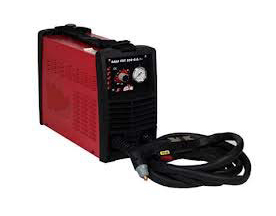
Manual plasma cutting equipment is currently an indispensable tool for industry in general. They are very useful in manufacturing and maintenance tasks for cutting metals, stainless steel, carbon steel, and aluminium among others.
Portability
One of its characteristics is the portability of the equipment, which due to its low weight facilitates use both in the workshop and on site. Furthermore, most of these units also accept the installation of a mechanised cutting torch, meaning they are suitable for installation on automatic feed devices such as pantographs, feed carriages, pipe cutting machines, robots, etc.
Cutting Process
The arc cutting process is one where an open arc, similar to what occurs in TIG welding, can be constricted by passing it through a small nozzle, or orifice, from the electrode to the workpiece. The gas used is typically air and is combined with electrical current to create a high-temperature plasma arc. When brought into contact with an electrically conductive material, the arc passes through the metal, melting a thin area. The force of the arc pushes the molten metal through the workpiece and cuts the material.
Duty Cycle
It is important to note the duty cycle of the machine as the number of minutes within a 10-minute period in which the welding machine operates at its rated capacity. For example, a 300-ampere machine at 60% duty cycle could operate at 300 amperes for 6 minutes and then needs to cool down, via its fan, for 4 minutes.
Advantages of Plasma Cutting
Plasma cutting offers numerous advantages over other cutting processes:
- Cuts faster than other methods
- Does not require a preheating cycle, saving time and being more convenient
- Produces a more precise kerf width (cut width), excellent when precision matters
- Has a smaller heat-affected zone, preventing warping around the cut or paint damage
Material Versatility
Some other processes cannot cut stainless steel or aluminium, while the plasma process can cut any type of electrically conductive metal, including brass, copper, titanium, and galvanised steel. Plasma cutting is fast, clean, and leaves a straight edge.
Cutting Table
| Material | Thickness (mm) | Current (A) | Max Speed (mm/min) |
|---|---|---|---|
| Carbon steel | 1.3 | 30 | 10,007 |
| Carbon steel | 3.4 | 30 | 2,210 |
| Carbon steel | 4.8 | 30 | 1,321 |
| Carbon steel | 6.4 | 30 | 838 |
| Carbon steel | 9.5 | 30 | 381 |
| Aluminium | 1.3 | 30 | 10,135 |
| Aluminium | 3.4 | 30 | 1,981 |
| Aluminium | 6.4 | 30 | 660 |
| Aluminium | 9.5 | 30 | 279 |
| Stainless steel | 1.3 | 30 | 5,613 |
| Stainless steel | 3.4 | 30 | 1,397 |
| Stainless steel | 6.4 | 30 | 610 |
| Stainless steel | 9.5 | 30 | 279 |
Maintenance
- Replace the electrode when its front part shows a cavity of approximately 1 mm
- Replace the nozzle when the orifice is no longer regular and cutting capacity has decreased
- Always ensure the arc fully penetrates the workpiece
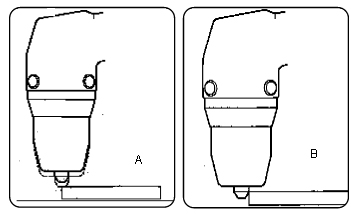
- Never exceed a 10-15° forward inclination
- If workshop air contains notable moisture and oil, use a dryer filter
Safety
Plasma cutting produces fumes and gases that can be hazardous to health. Good ventilation and appropriate clothing are required.